
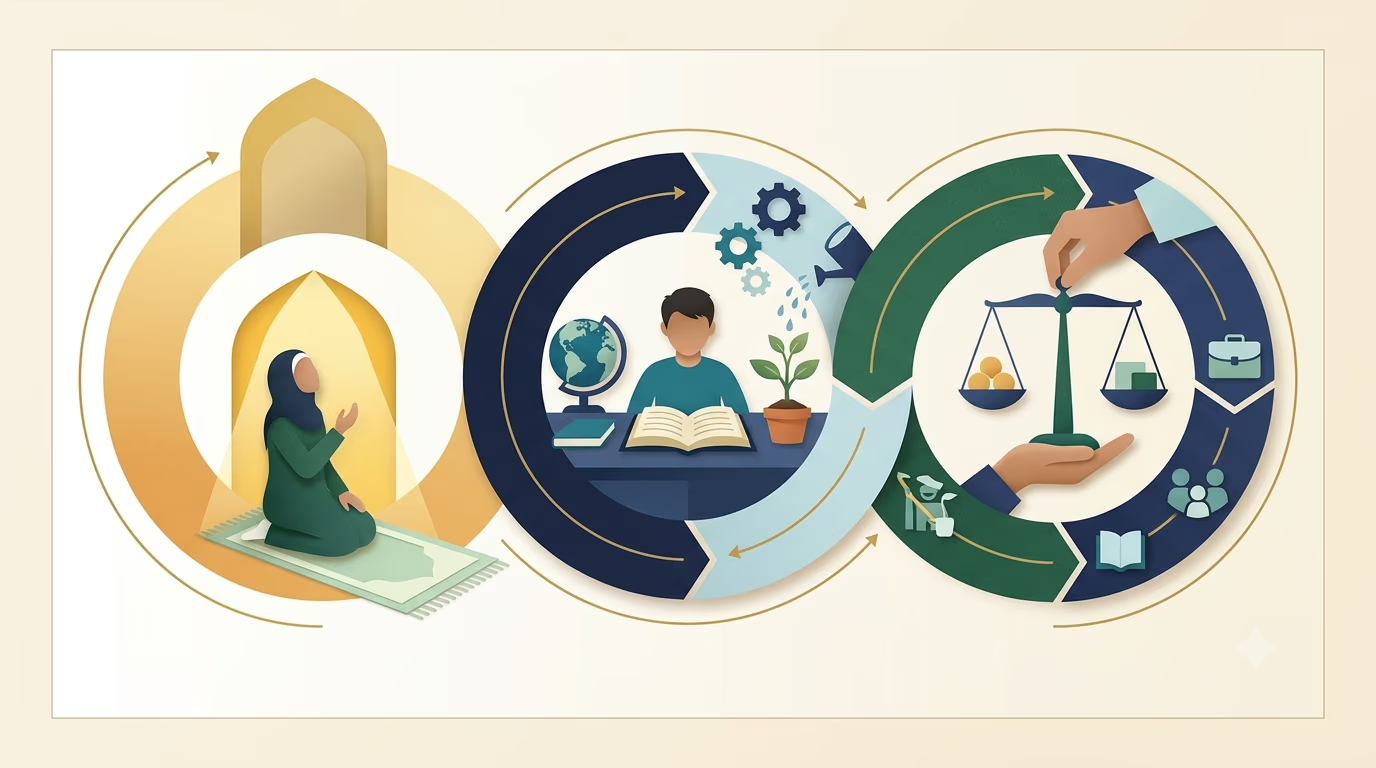
The question beneath every other question
A child looks at the night sky and asks, 'Where was I before I was born?' A teenager asks, 'What am I supposed to do with my life?' An adult beside a grave asks, 'Where do we go from here?'
These are not three separate questions. They belong to one story. To know what a human life is for, we need to know whose life it is, where it began, what happened before this earthly chapter, what we have been given here, and whether death is an ending or a passage.
Modern life often asks us to begin in the middle: choose a career, build an identity, become visible, leave a legacy. These can be good, but none can carry the full weight of purpose. Careers end, approval shifts, and legacies fade. A meaning built only on achievement makes weakness, illness, and obscurity look like lesser lives.
The Quran begins deeper. You did not create yourself or arrive ownerless. Your worth was not awarded by an audience, and your purpose does not disappear when your plans do. Human life belongs to a journey authored by Allah: creation, earthly responsibility, guidance, choice, death, resurrection, and return.
وَلَقَدْ خَلَقْنَا ٱلْإِنسَـٰنَ مِن صَلْصَـٰلٍۢ مِّنْ حَمَإٍۢ مَّسْنُونٍۢ ٢٦
Excerpt: created man out of clay from an altered black mud.
Made from earth, but not merely earth
The Quran describes Adam's material beginning through dust, earth, and clay. The language is humbling. The first human was not fashioned from a substance that could justify arrogance. Our bodies depend on the earth for life and return to it when life ends.
That origin does not make us worthless. It breaks the illusion of self-sufficiency. Clay cannot give itself form, life, knowledge, or responsibility. The Quranic story holds humility and dignity together: our material is dependent, while Allah gives the human being honor and a place within a moral world.
The Quran's accounts of Adam and his descendants are connected but not identical. Surah Al-Mu'minun 23:12-14 moves from an extract of clay to human development through a reproductive beginning and created stages. Adam is the human origin; his descendants come through the means Allah established.
Your body therefore belongs to the created world and should be cared for with gratitude, yet you cannot be reduced to chemistry, appearance, strength, or productivity. The body is an entrusted part of a life that receives meaning from its Creator.
How did humanity come to live on Earth?
Many people remember the story only as a fall: Adam and his wife lived in the garden, Satan caused them to slip, and they were sent down. But the Quran begins the earthly chapter earlier. Before the trial, Allah tells the angels that He will place a successive human authority on Earth in Surah Al-Baqarah 2:30. Earthly life is already part of the announced human story.
Adam and his wife receive a home, abundance, and a boundary. Satan whispers and they disobey, but failure is not the final word. Adam receives words from his Lord, Allah accepts his repentance, and guidance is promised for Earth in Surah Al-Baqarah 2:35-38. The movement is gift, command, weakness, repentance, mercy, responsibility, and guidance.
Human beings can forget, choose badly, recognize wrong, turn back, and follow guidance. Our first story neither treats sin casually nor teaches despair. Repentance is built into the human path. A serious mistake need not become an identity from which no return is possible.
Earth is both home for a term and a place of responsibility. We receive families, time, skill, land, knowledge, and one another; we can cultivate or corrupt. The phrase in 2:30 has several translations, including successive authority. It does not grant unlimited ownership. We remain created, bounded, and accountable for every trust.
The Quranic shape of the human journey
- Origin
Created by Allah
Adam's material origin is clay; human life begins by Allah's will, not self-creation.
- Honor
Form, life, and knowledge
Allah gives the human being capacities and responsibility that material origin alone cannot explain.
- Garden
Gift, command, and human choice
Adam and his wife receive provision and a boundary, then experience temptation and error.
- Repentance
Mercy before the earthly road
Adam turns back, Allah accepts his repentance, and guidance accompanies humanity to Earth.
- Earth
Worship, trust, and testing
Each life unfolds through choices, relationships, work, worship, service, weakness, and return.
- Death
The appointed passage
The body returns to earth, while death opens the stage that leads to resurrection and judgment.
- Hereafter
Raised and returned
Human beings are gathered to Allah and receive the full consequence of how they lived.
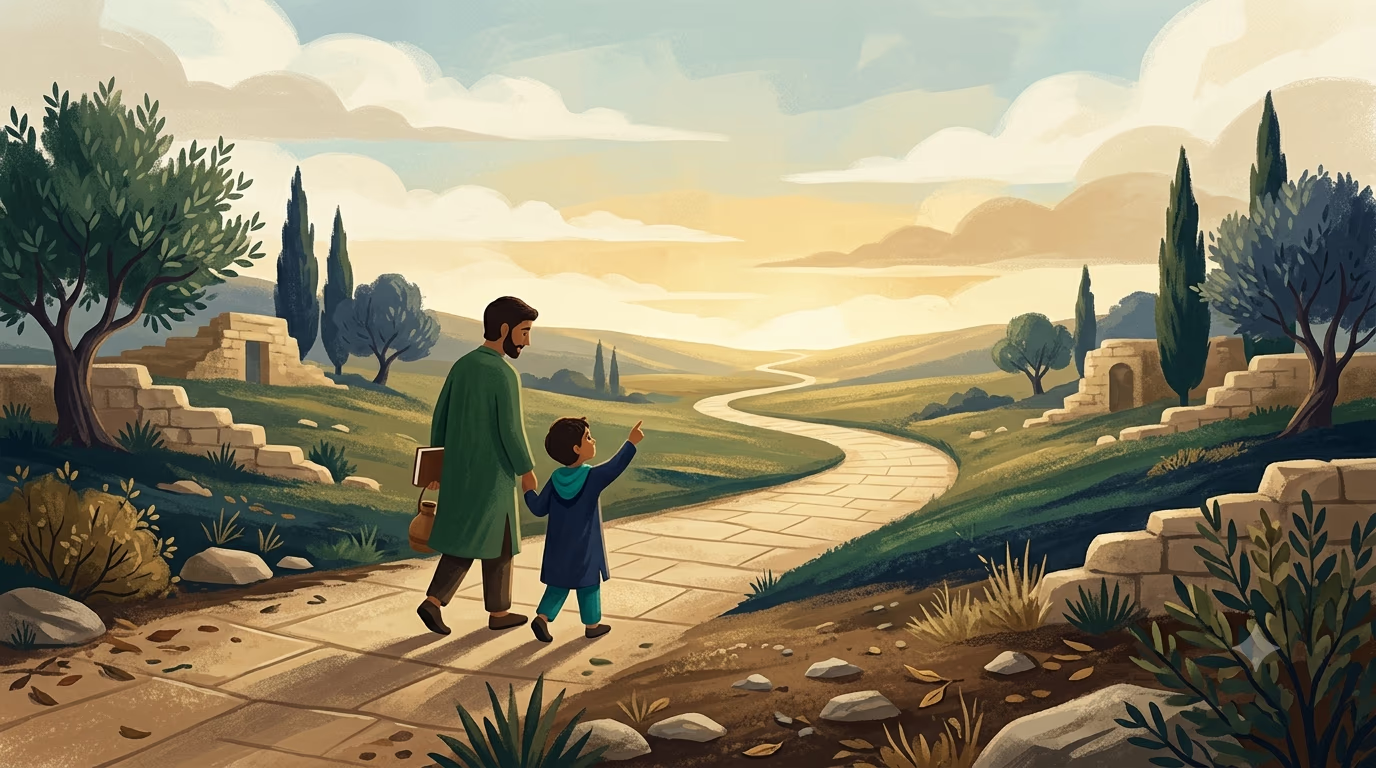
وَيَسْـَٔلُونَكَ عَنِ ٱلرُّوحِ ۖ قُلِ ٱلرُّوحُ مِنْ أَمْرِ رَبِّى وَمَآ أُوتِيتُم مِّنَ ٱلْعِلْمِ إِلَّا قَلِيلًۭا ٨٥
Excerpt: The soul is of the affair of my Lord.
What is the ruh? Begin with the Quran's boundary
The mystery is intimate. A living person perceives, remembers, loves, chooses, and acts. At death, the body remains, but the person no longer lives among us. It is natural to ask what the ruh is.
The Quran establishes a boundary. In Surah Al-Isra 17:85, the Prophet is instructed to say that the ruh belongs to the affair or command of his Lord and that humanity has received little knowledge. We affirm an unseen reality without pretending to possess its anatomy.
Another passage describes Adam being proportioned and a created spirit being breathed into him by Allah's command in Surah Al-Hijr 15:29. This does not mean a human contains a piece of Allah. The ruh is created and dependent; Allah is the uncreated Lord who gives life.
Translations may render ruh as spirit or soul, while scholars discuss ruh and nafs with contextual distinctions. We need not force every occurrence into one diagram. The safe foundation is enough: the ruh is real, life is given by Allah, and its full nature exceeds our small share of knowledge.
That limit is useful. We do not need to solve the substance of the ruh before answering for our lives. Revelation turns us from endless speculation toward responsibility: 'How should I live, knowing that my life is given, seen, and returning?'
وَمَا خَلَقْتُ ٱلْجِنَّ وَٱلْإِنسَ إِلَّا لِيَعْبُدُونِ ٥٦
Excerpt: except to worship Me.
Our purpose is worship - but worship is larger than a moment
The Quran gives a direct center to human existence in Surah Adh-Dhariyat 51:56: jinn and humanity were created to worship Allah. Worship begins with recognizing that Allah alone is Lord and deserves worship. It appears in prayer, remembrance, fasting, charity, supplication, and every obligation He commands.
Worship cannot be locked inside a prayer space while the rest of life answers to another master. Surah Al-An'am 6:162 orients prayer, sacrifice, living, and dying toward Allah. A good intention cannot make a forbidden act acceptable, but lawful actions can belong to worship when done sincerely and within His guidance.
A parent who earns honestly, apologizes after harsh words, teaches patiently, or protects someone vulnerable is not stepping outside purpose. A student who learns carefully, writes code that does not harm, respects a teacher, and refuses to cheat can connect study to worship. Deen and useful worldly knowledge both answer one question: does this choice please Allah and fulfill a trust?
This protects us from reducing worship to rituals with little effect on character, or treating social usefulness as enough while neglecting direct worship. Quranic purpose gathers inward and outward life: prayer trains return, repentance repairs direction, character reveals devotion, and service carries responsibility to others.
Purpose is stable without being monotonous. Childhood, study, work, caregiving, illness, leadership, strength, and dependence present different trusts. The center remains: worship Allah faithfully with the life, limits, relationships, and opportunities placed in your hands.
A servant before Allah
A servant receives existence, guidance, and provision rather than claiming independence. Worship includes love, humility, gratitude, hope, fear, obedience, and repeated return after failure. This identity protects the heart from making achievement, desire, or public approval into a lord.
A trustee among creation
Earthly responsibility appears in how we treat people, knowledge, wealth, animals, land, time, ability, and authority. Trust does not mean ownership without limits. It means using what Allah gives in ways for which we are willing to answer.
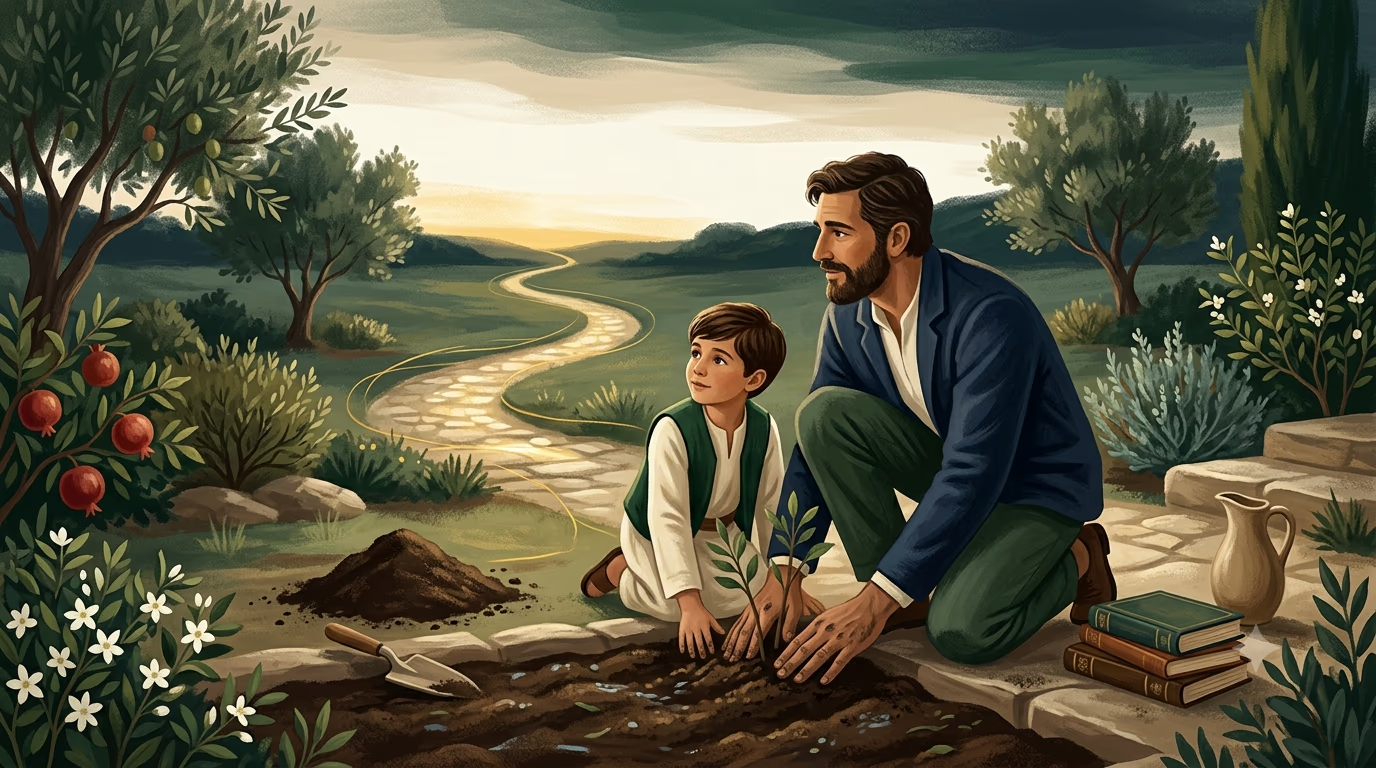
What are we doing here until death?
The Quran describes Allah as the One who created death and life to reveal which people are best in deed in Surah Al-Mulk 67:2. It does not say most in deed. A life can be busy but directionless. The test concerns faith, sincerity, obedience, justice, patience, repentance, and how we use what we receive.
Calling life a test does not make every hardship a punishment or let us read Allah's judgment from another person's pain. Ease can test gratitude; difficulty, patience; knowledge, humility; influence, justice. A sin can become where pride hardens or sincere repentance begins.
The test is serious, but hope remains rational. The verse ends by naming Allah as mighty and forgiving. Faith can feel strong or tired and plans can open or collapse. The practical question is whether we keep returning to the center.
This changes success. Wealth, grades, attention, and recognition can be blessings, tests, or distractions; none is a final verdict. An unknown person may live a weighty life of worship, while an admired person neglects essential trusts. Visible outcomes are not Allah's complete judgment.
For a family, teaching purpose means more than asking children what job they want. Ask what kind of servant, neighbor, learner, builder, friend, and caretaker they are becoming. Teach them that useful skill and moral formation belong together. Quran Foundations should help a learner read revelation with growing care, while mathematics and computer science can train precision, perseverance, and responsible problem-solving. Knowledge becomes part of purpose when it is sought and used under guidance.
A daily purpose check
- Begin an ordinary task by correcting the intention behind it.
- Protect the obligatory worship that gives the day its structure.
- Name one trust in front of you instead of escaping into an imagined future.
- Learn something useful with honesty and intellectual humility.
- Repair one wrong through apology, restitution, or repentance.
- Use one ability to benefit another person without needing recognition.
- Remember death without abandoning hope, work, family, or gratitude.
Death does not make the story meaningless
If death erased every person and deed, purpose would remain fragile: the unpunished oppressor and the person who sacrificed quietly would reach the same nothing. The Quran places death inside a larger moral horizon.
Surah Ta-Ha 20:55 gathers the physical journey: humanity is created from earth, returned to it, and brought out again. Burial and grief are real, but earth is not the final destination. The Creator who originated life can raise it, and human choices are not lost.
Surah Ali 'Imran 3:185 says every soul will experience death and full recompense comes on Resurrection Day. Death is certain but its date is hidden. An appointed end makes time a trust.
Remembering death does not mean refusing joy, planning, education, beauty, or family. Receive them without treating them as permanent possessions. Love your family as a trust, build work that benefits others, repent without delay, and refuse wrongdoing whose short advantage is not final success.
The journey that began by Allah's will returns to Allah's judgment and mercy. We do not control the length of the road, but we are responsible for its direction. The believer lives between accountability and hope: deeds matter enough to answer for, and Allah's mercy is too great for despair.
Frequently asked questions
Does Islam teach that every human is directly made from clay?
The Quran connects humanity's origin to clay through Adam, then describes his descendants developing through the reproductive stages Allah established. The passages should be read together rather than collapsed into one physical process.
Is the ruh a part of Allah?
No. The Quranic wording honors the created spirit and the act by which Allah gives life; it does not make the Creator part of creation. The ruh is dependent on Allah, and its full nature is knowledge He has not given us.
Are ruh and nafs exactly the same?
The terms overlap in some English renderings, while Islamic scholars discuss contextual distinctions. The Quran does not give us permission to claim a complete mechanical map. This article therefore affirms the ruh and keeps the boundary stated in 17:85.
Does worship mean leaving worldly education and work behind?
No. Direct acts of worship remain essential, while lawful study, work, family care, service, and rest can belong to a life oriented toward Allah when intention, method, and outcome respect His guidance.
If Earth was intended, did Adam's mistake matter?
Yes. The disobedience, repentance, and acceptance are morally meaningful. At the same time, the Quran announces an earthly human role before narrating the garden trial, so Earth is not presented merely as an unplanned divine reaction.
Live from the whole story
Who are we? Created, dependent, honored, responsible servants of Allah. Our bodily origin is tied to earth through Adam, while our lives are given through means and a command we do not master. The ruh is a created matter from our Lord's command whose essence exceeds our knowledge. We are on Earth to worship Allah within this appointed life's relationships, choices, and guidance. At death the body returns to earth, while the journey continues toward resurrection, judgment, and Allah's mercy.
These answers put mystery in its proper place. We know enough to live, repent, learn, worship, serve, and prepare, but not enough for arrogance.
Purpose is practiced in repeated returns: prayer after distraction, truth after temptation, apology after anger, honest study, unlawful money refused, a child treated as a trust, and a private deed for Allah alone. Ordinary days can carry eternal weight.
Read the cited passages in context and discuss them with a qualified teacher before treating this article as the final word on a theological question. UmarCode Campus begins Quran learning with careful foundations, not isolated quotations. Explore the Quran Foundations pathway or see how one-to-one learning works when your family is ready to study with structure and accountability.
Continue with care
Build accurate reading, understanding, and a dependable relationship with Quran learning.
See how learner matching, one-to-one teaching, and visible next steps fit together.
Read the standard and founding purpose behind the learning experience.