

Picture a Friday evening. The dishes are still in the sink, your child has been up since Fajr for school, and you finally sit down together with the mushaf open on the table. You ask them to repeat the ayah after you. They mumble it once, then ask if they can go finish their game. You feel that familiar tightness in your chest, not anger exactly, but something closer to worry. If tonight is how it goes, what will it look like in five years?
If that scene sounds familiar, you are not failing. You are standing exactly where most parents who care about their child's relationship with the Qur'an eventually stand: caught between wanting the Qur'an to matter deeply to your child and not knowing how to make that happen without turning it into a fight.
This guide will not promise a shortcut. What it offers instead is a realistic, age-by-age way to teach your child the Qur'an at home, grounded in how children actually learn, what has worked across generations of Muslim families, and where you may eventually need more structured support than a busy evening can provide.
Before we get into ages and methods, it helps to remember something. You are not the first parent to feel this tension. Families have been teaching children the Qur'an at home for over fourteen centuries, long before printed mushafs, curricula, or apps existed. What they built out of necessity still works today, and it looks less like a lesson plan and more like a relationship.
That relationship is really what this whole guide is about. Not a faster method, not a perfect schedule, but a steady, honest way of being with your child around the Qur'an so that neither of you dreads the moment you sit down together.
What the First Teachers Understood
Long before printed mushafs, structured curricula, or online lessons, Qur'an teaching in Muslim households and mosques ran through relationship and repetition. In Madinah, the Prophet Muhammad, peace be upon him, would listen to his companions recite, correct their mistakes, and send them to teach others what they had learned. These gatherings became known as halaqas, circles of learners sitting closely around a teacher, reciting together, checking each other's pronunciation, and returning the next day to keep building.
This mattered because the Qur'an was preserved less through paper than through people. Companions such as Uthman ibn Affan, Ali ibn Abi Talib, and Ubayy ibn Ka'b became known specifically as those who taught the Qur'an to others, including the generation that came after them. Teaching a child the Qur'an was never treated as a side task fitted around "real" learning. It was considered some of the most valuable work a person could do, a point the Prophet made directly to his companions.

خَيْرُكُمْ مَنْ تَعَلَّمَ الْقُرْآنَ وَعَلَّمَهُ
The best among you are those who learn the Qur'an and teach it.
Why Age Changes Everything
That history offers something practical, not just inspiring. It shows that Qur'an learning has always adapted to the learner in front of it. A companion memorizing as an adult and reciting alongside scholars in a masjid learned differently than a five-year-old will learn at your kitchen table today. The goal, methods, and pace should change with your child's age. Expecting a six-year-old to sit still for detailed Tajweed rules is not more serious teaching, it is teaching aimed at the wrong stage.
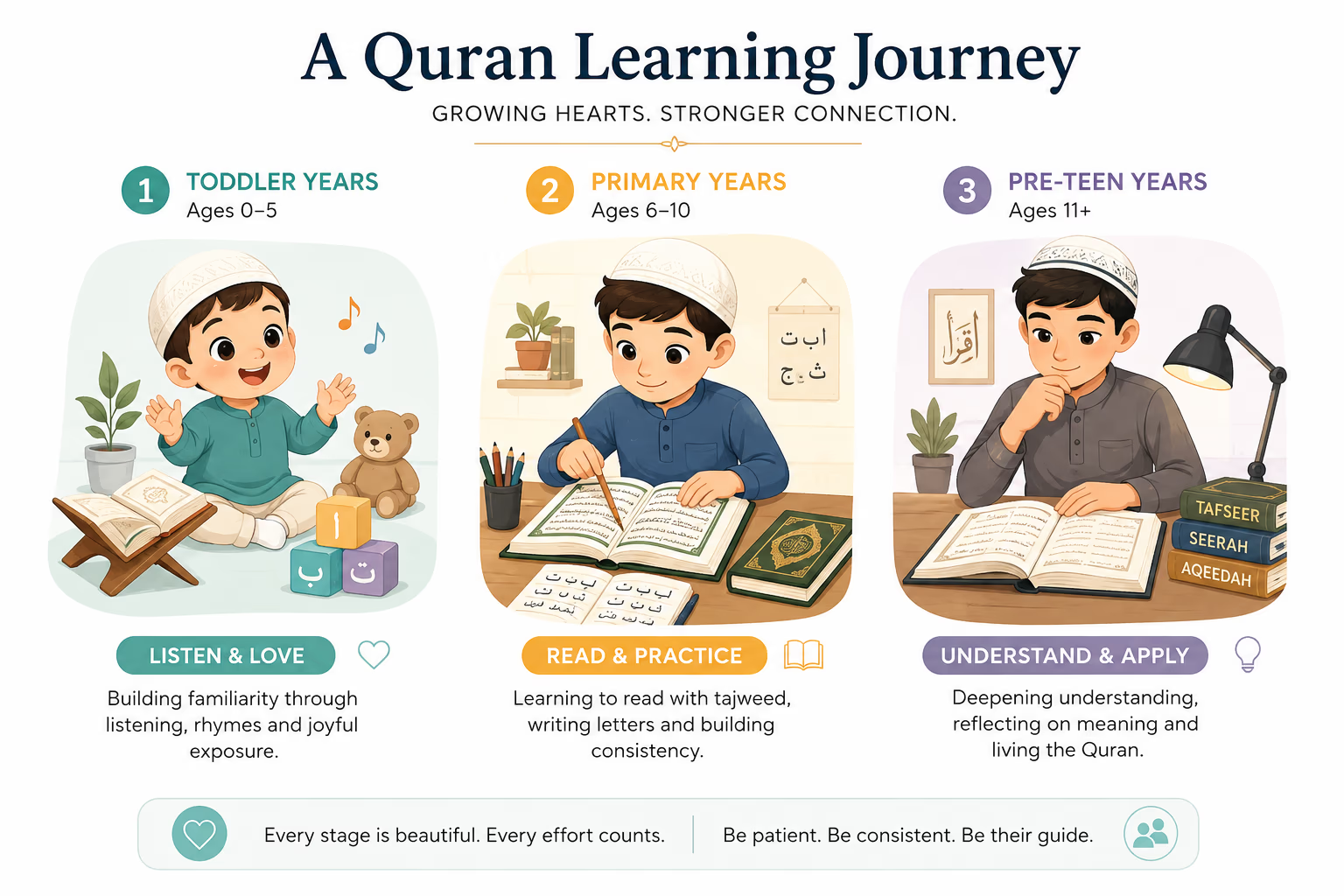
The sections below walk through three broad stages: early years, primary years, and the pre-teen years and beyond, all part of the same Quran learning pathway your child moves through over time. Use your child's actual readiness, not their birthday, to decide which stage fits best right now. A child who is a strong reader at eight may already be ready for some of the ideas in the next stage, and a ten-year-old who is still building confidence may need more time in the primary-years approach. Treat the ages as guideposts, not deadlines.
Ages 3 to 6: Building Love Before Fluency
At this age, the goal is not correct Tajweed or independent reading. It is familiarity and affection, making the sound, rhythm, and presence of the Qur'an feel normal and warm in your home before your child is asked to perform anything with it.
Start with short surahs your child already hears often, such as Al-Fatiha and the final few surahs of the Qur'an. Recite them aloud during ordinary moments, in the car, before bed, while getting ready in the morning, so your child absorbs the sound the way they absorb any other language around them. Let them repeat phrase by phrase rather than correcting every mispronunciation immediately. Confidence at this stage matters more than precision.
Keep sessions genuinely short. Five to ten focused minutes, once or twice a day, will do far more than a single twenty-minute session that ends in frustration for both of you. If your child loses interest after three minutes today, stop there. A short session that ends well is more valuable than a long one that ends in tears.
Movement and repetition help more than sitting still and concentrating at this age. Many young children learn a surah faster while walking around the room, tracing letters in the air, or clapping along to the rhythm than while sitting formally with a book open. If your child associates Qur'an time with wriggling and play rather than stillness, that is not a discipline problem to fix yet, it is simply how a three- or four-year-old learns anything.
Some children this age pick up sounds quickly. Others need the same surah repeated for weeks before it feels familiar. Both are normal. What matters most at this stage is that your child associates the Qur'an with your calm attention, not with pressure to perform for relatives or teachers.

Ages 7 to 10: From Listening to Reading
Somewhere between six and eight, most children are ready to move from listening and repeating toward actually reading Arabic letters themselves. This is the stage where letter recognition, joining letters into words, and basic pronunciation rules become realistic goals, not because the child is older, but because attention span and working memory can now hold more than one instruction at a time.
A steady, predictable routine works better here than an ambitious one. Many families find success with a simple weekly rhythm: a few short sessions reviewing previously learned material, a couple of sessions introducing new material, and one lighter day. The specific schedule matters less than the fact that your child can predict when Qur'an time happens, the same way they predict when meals or bedtime happen.
This is also the age where children start comparing themselves to siblings, cousins, or classmates who seem to be progressing faster. Resist measuring your child against another child's pace. Reading fluency in Arabic develops on a different timeline for every learner, and a child who reads slowly but accurately is often better positioned long term than one who reads quickly but guesses.
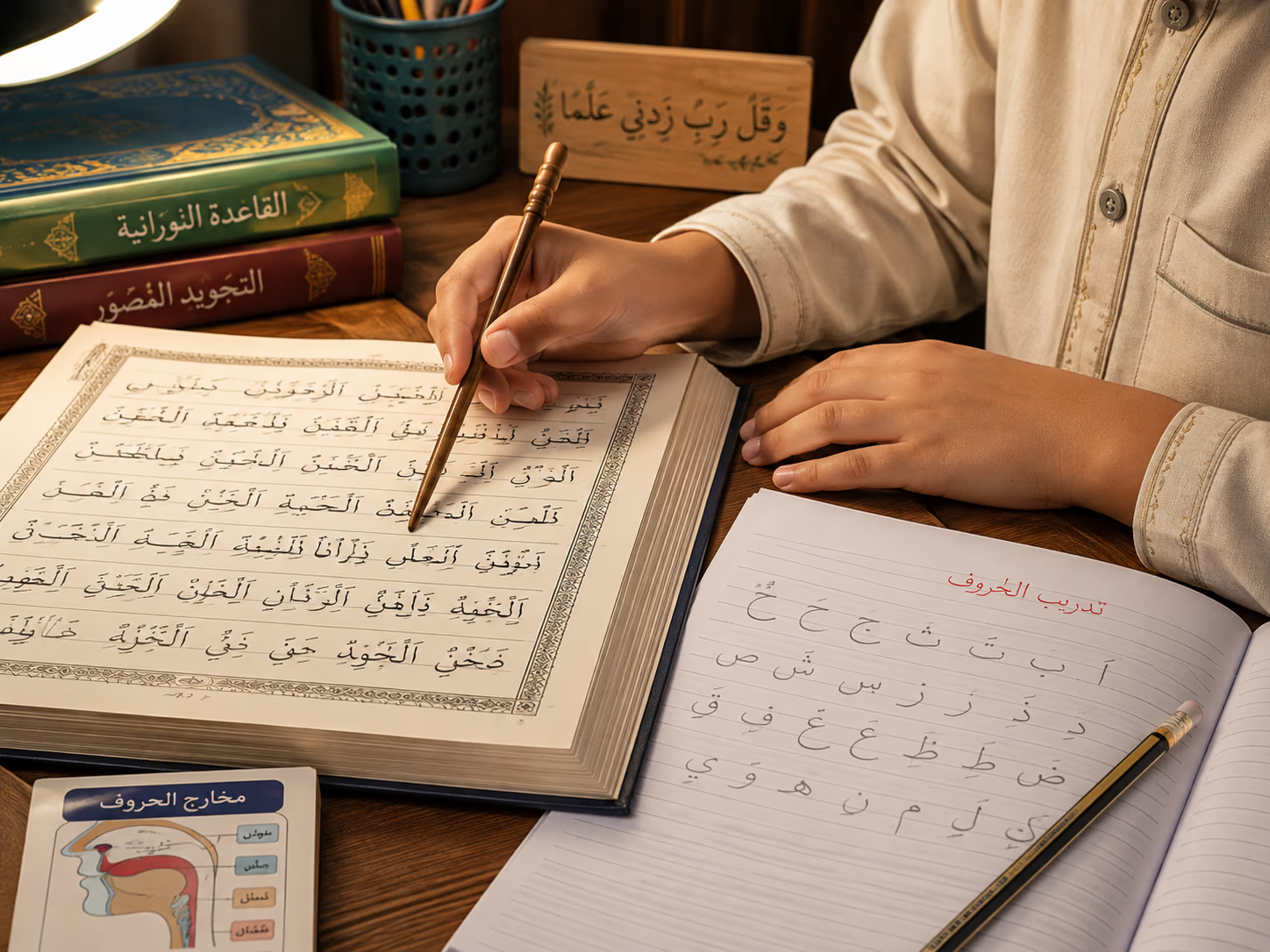
Handwriting practice, even copying a few letters or short words, reinforces reading more than most parents expect. Tracing a letter while saying its sound out loud engages a different kind of memory than listening alone, and many children who struggle to recognize a letter on the page recognize it immediately once they have written it a few times themselves.
If you notice your child consistently mixing up similar letters, guessing instead of sounding out words, or losing confidence despite steady practice, a program built specifically for this transition, such as beginner Quran lessons built for this exact transition, focuses on exactly this shift from letter recognition to confident, independent reading.
Ages 11 and Up: Ownership, Meaning, and Tajweed
By eleven or twelve, many children can read the Qur'an reasonably well but recite it the way they might read an unfamiliar language out loud, accurately, but without much sense of what the words mean or why the rules of Tajweed matter. This is the stage to shift the goal from decoding to understanding.
Introduce the meaning of what your child recites, even briefly. A single sentence of context before or after a passage, who it was revealed to, or what it is teaching, does more for a pre-teen's engagement than another ten minutes of pure repetition. At this age children start asking why questions about their faith generally, and the Qur'an should be part of those conversations, not separate from them.
Tajweed also becomes more important now, because incorrect habits formed earlier are harder to unlearn the longer they continue. Rules around elongation, nasalization, and articulation points benefit from a teacher who can listen in real time and correct pronunciation as it happens, since it is difficult for a parent to catch every small error while also managing the rest of the lesson.
Ownership matters as much as accuracy at this stage. A pre-teen who chooses which surah to focus on next, sets their own small weekly goal, or picks the time of day for practice is far more likely to stay engaged than one who is simply told what to recite. Involving your child in these small decisions signals that the Qur'an is becoming theirs, not only something asked of them.
This is often the stage where families choose to add a structured recitation program alongside home practice, not instead of it. A course such as a dedicated Tajweed and recitation program is designed for learners who can already read but need consistent, corrective feedback to recite with real precision.
Your First Week: A Simple Starting Routine
- 01
Pick one short surah
Choose a surah your child already recognizes, even partly, so the first sessions build confidence rather than starting from zero.
- 02
Set a fixed, protected time
Attach it to something that already happens daily, such as right after Fajr or right before bed, rather than hoping to find a spare moment.
- 03
Keep the first sessions under ten minutes
Stop while your child is still engaged. A short session that ends well makes tomorrow's session easier to start.
- 04
Review before adding anything new
Spend the first two or three days only reviewing the chosen surah before introducing any new material.
- 05
Notice and name effort, not just accuracy
At the end of each session, mention one specific thing your child did well, even if the recitation was imperfect.
The Real Secret Isn't the Method, It's the Rhythm
Across every age group above, one pattern shows up more than any specific method: consistency beats intensity. A child who practices for ten honest minutes almost every day will typically progress further than a child who practices for an hour only when a parent has energy for it.
Choose a time of day your family can actually protect, often right after a fixed daily anchor like Fajr, Maghrib, or getting ready for school, rather than trying to fit Qur'an time into whatever is left of the evening. Keep the same physical spot each time if possible, since a consistent environment reduces the friction of starting. Separate correction from connection: if a session becomes tense, it is usually better to end warmly and return to it calmly the next day than to push through a frustrated ten minutes that leaves both of you dreading the next attempt.
Motivation at home works best when it is proportionate. Genuine encouragement for effort, not just results, keeps a child engaged longer than rewards tied strictly to how much was memorized or how quickly a surah was read. Seeing how parent-visible progress works in a live lesson is a useful model even for a home routine: your child should always know what today's small win looks like, not just the distant goal.
Expect setbacks. Illness, travel, a difficult week at school, or simply a stretch of low motivation will interrupt even a good routine. What separates families who keep going from those who quietly stop is not the absence of interruptions, it is a habit of returning to the same time and place afterward without treating the break as a failure.
Common Mistakes Parents Make, and What Works Instead
Do
- Keep sessions short and end on a positive note, even if progress was slow.
- Match expectations to your child's age and current stage, not a sibling's pace.
- Explain a little meaning alongside recitation, especially from age nine onward.
- Bring in a teacher for Tajweed correction once habits start to form.
Avoid
- Correct every mistake mid-sentence; it breaks flow and confidence.
- Turn Qur'an time into a punishment or a bargaining tool for good behavior.
- Compare your child's memorization speed to another child's.
- Wait until frustration is high on both sides before changing your approach.
A Realistic Next Step
If today's scene at your kitchen table felt more like a struggle than a lesson, you are not alone, and it does not mean the relationship between your child and the Qur'an is broken. Many parents reach a point where they want steady, expert support without giving up their own role in their child's learning. When your child resists learning covers this exact tension in more depth, including how to tell ordinary resistance apart from a deeper problem.
Whatever stage your child is in, the most useful next step is usually a small, honest one: pick one age-appropriate practice from this guide, protect ten minutes for it tomorrow, and give it two consistent weeks before deciding whether you need more support.
Frequently asked questions
What age should I start teaching my child the Qur'an at home?
Most families begin informally as early as age two or three, through listening and repetition rather than reading. Formal letter recognition and reading typically start between ages five and seven, depending on the child.
How long should a home Qur'an session be?
For young children, five to ten focused minutes is enough. Primary-age children can often manage fifteen to twenty minutes, and pre-teens may handle longer sessions when the content includes meaning, not just repetition.
My child keeps forgetting what we practiced. Is that normal?
Yes. Forgetting and re-learning is a normal part of memorization at every age. Regular review of previously learned material matters as much as learning new material.
Do I need to know Tajweed myself to teach my child?
You can guide early listening and repetition without formal Tajweed knowledge. As your child moves toward independent reading and recitation, a qualified teacher becomes more valuable for catching pronunciation errors you may not hear yourself.
How do I know if my child needs a teacher instead of just more home practice?
If progress has stalled for several weeks despite consistent practice, or if Qur'an time consistently causes frustration for you or your child, that is a reasonable signal to add structured teaching rather than only adjusting the home routine.